Have you ever wondered if your bomb shelter can actually protect you from a nuclear explosion? The idea of a nuke is terrifying, and knowing whether your shelter can withstand such a force is crucial for your safety and peace of mind.
You’ll discover the key factors that determine a bomb shelter’s strength against a nuclear blast. By the end, you’ll understand what makes a shelter reliable and what might leave you vulnerable. Keep reading—your safety could depend on it.
Nuclear Blast Effects
Nuclear blasts create extreme and deadly effects. Understanding these effects helps to know if a bomb shelter can survive a nuke. The main dangers include a powerful blast wave, intense heat, and dangerous radiation. Each of these can damage structures and harm people. A shelter must be built to handle these forces to offer real protection.
Blast Wave Impact
The blast wave is a sudden, high-pressure shock wave. It travels fast and can destroy buildings nearby. The pressure can crush walls and shatter windows. A strong shelter uses thick, reinforced materials to resist this force. Underground shelters fare better because soil and earth absorb some pressure. The farther from the blast, the weaker the wave becomes.
Thermal Radiation Damage
Nuclear explosions release intense heat and light. This thermal radiation can cause severe burns and fires. The heat can melt or ignite many materials. A proper bomb shelter has heat-resistant surfaces and insulation. It blocks the heat to protect those inside. Even a small gap can let heat in, so tight seals are vital.
Radiation Exposure Risks
Radiation from a nuclear blast is deadly. It includes gamma rays and neutrons, which can damage cells. Radiation can cause sickness and long-term health problems. Shelters need thick concrete or lead lining to block radiation. Air filters stop radioactive dust from entering. Staying inside during fallout reduces exposure greatly.

Credit: uk.style.yahoo.com
Types Of Bomb Shelters
Bomb shelters come in different types, each designed to offer protection from nuclear blasts and radiation. Understanding these types helps in choosing the right shelter for safety. Shelters vary by location, materials, and construction methods.
Underground Shelters
These shelters are built beneath the ground to block blast waves and radiation. Soil and concrete layers absorb shock and reduce radiation exposure. Underground shelters often have thick walls and air filtration systems. They provide the best protection during a nuclear event. Many government and private shelters use this design.
Above Ground Shelters
Built on the surface, these shelters rely on strong materials like reinforced steel and concrete. They are easier to access but offer less protection from shock waves. Above ground shelters often include thick walls and blast doors. They can protect against radiation if properly sealed and filtered. These shelters suit areas where digging is difficult.
Improvised Shelters
Improvised shelters use available materials to create quick protection. People may use basements, subway stations, or interior rooms with no windows. Covering walls with heavy furniture or earth can help block radiation. These shelters offer limited safety but are better than no shelter. They require careful planning to improve survival chances.
Shelter Construction Materials
Strong shelter materials like reinforced concrete and steel can help withstand nuclear blasts. Proper design reduces radiation and heat damage, increasing survival chances.
In the quest for survival against nuclear threats, choosing the right shelter materials is crucial. Different materials offer varying levels of protection and effectiveness. Each has its unique properties and benefits.Reinforced Concrete
Reinforced concrete stands as a strong choice for bomb shelters. It combines concrete’s strength with steel reinforcement. This mix provides excellent durability and resistance. Concrete blocks radiation and withstands pressure. It’s widely used in shelter construction due to these features.Steel And Lead Shielding
Steel and lead provide substantial protection against nuclear radiation. Steel offers structural strength and durability. Lead, though dense, effectively blocks harmful radiation. Together, they form a powerful barrier. This combination ensures maximum safety in extreme conditions.Earth And Soil Protection
Earth and soil add natural protection layers to bomb shelters. Thick layers absorb and deflect radiation. They also insulate against extreme temperatures. Earth-covered shelters blend into the landscape, offering camouflage. This makes them less visible to potential threats.
Credit: globalnews.ca
Blast Resistance Features
Blast resistance is the cornerstone of a bomb shelter’s ability to withstand a nuclear explosion. It’s not just about having thick walls; it’s about smart design elements working together to protect you from extreme forces. Understanding these features can help you evaluate or improve your shelter’s safety.
Structural Strength
The shelter’s frame must be incredibly strong to survive the intense pressure from a blast wave. Reinforced concrete with steel rebar is a common choice because it can absorb and redirect energy rather than crack or collapse.
Walls and ceilings often need to be several feet thick to provide enough protection. Even small weak points can become dangerous under such force, so every joint and seam must be carefully sealed and reinforced.
Air Filtration Systems
Blast resistance isn’t just about stopping shockwaves; you also need to breathe safely inside. Advanced air filtration systems remove radioactive particles, chemical agents, and biological contaminants from the air.
These systems often include HEPA filters combined with activated carbon filters. They ensure that even if the outside environment is deadly, your air supply remains clean and safe.
Sealed Entrances
The entrances are the most vulnerable part of any bomb shelter. Heavy blast doors with airtight seals prevent deadly gases and radiation from entering.
These doors often use multiple locking mechanisms and thick rubber gaskets to maintain a tight seal. You have to ask yourself: does your shelter’s entrance offer the same level of protection as its walls?
Radiation Shielding Capabilities
Radiation shielding is a critical factor when considering if a bomb shelter can truly protect you from a nuclear blast. The shelter’s ability to block or reduce harmful radiation directly impacts your survival chances. Understanding the types of radiation and how shelters defend against them can help you evaluate or improve your safety measures.
Gamma Radiation Protection
Gamma rays are the most penetrating form of nuclear radiation. They can pass through most materials, making them particularly dangerous. Effective bomb shelters use dense materials like thick concrete, lead, or packed earth to absorb these rays and reduce exposure.
For example, just a few inches of lead can significantly cut gamma radiation, but lead is expensive and heavy. Many shelters rely on thick concrete walls combined with additional earth layers for practical and affordable shielding.
Have you checked the thickness of your shelter walls? Even a small increase in density can drastically improve your protection against gamma rays.
Neutron Radiation Defense
Neutron radiation is another deadly form produced during a nuclear explosion. Unlike gamma rays, neutrons are neutral particles that can make materials radioactive.
Materials rich in hydrogen, such as water, polyethylene, or even wood, are excellent for slowing down and capturing neutrons. Many shelters include layers of these materials to reduce neutron penetration.
Think about the layout of your shelter—do you have any hydrogen-rich materials placed strategically to absorb neutrons? Simple additions like water containers or thick wood panels can enhance your defense.
Fallout Contamination Prevention
Nuclear fallout consists of radioactive particles that settle after the blast. Preventing these particles from entering your shelter is crucial to avoid internal contamination.
A good shelter has airtight seals on doors and vents, along with filtration systems that can trap radioactive dust. Positive air pressure systems help keep contaminated air out.
Have you tested the seals and filters in your shelter recently? Even tiny leaks can allow fallout particles inside, undermining your safety.
Survivability Factors
Understanding the key factors that influence a bomb shelter’s ability to survive a nuclear blast can make all the difference between life and death. Each factor plays a critical role in protecting you and your loved ones from the intense forces unleashed by a nuclear explosion. Let’s break down these elements to help you evaluate or improve your shelter’s chances of survival.
Distance From Blast Center
The farther your shelter is from the blast center, the better your chances of survival. Radiation and heat intensity drop sharply with distance, so even a few miles can significantly reduce exposure.
Think about it this way: being 10 miles away versus 1 mile can mean the difference between immediate danger and manageable risk. Are you able to position your shelter in a location that maximizes this distance?
Shelter Depth And Location
Depth matters a lot. Shelters built deep underground offer better protection against radiation, heat, and shockwaves. Ideally, your shelter should be beneath a sturdy layer of earth or concrete.
Location also impacts survivability—avoid areas prone to flooding or unstable soil. I once visited a shelter just a few feet underground that suffered severe damage during a heavy storm. This made me realize depth and site stability are not negotiable.
Duration Of Stay And Supplies
Surviving the initial blast is only half the battle. You may need to stay sheltered for days or even weeks to avoid fallout radiation. Your supplies—food, water, medical kits—must support you for this entire period.
Have you calculated how long your current provisions will last? Think about essentials like clean water, non-perishable foods, and ventilation systems. Running out of supplies could turn your shelter from a safe haven into a trap.
Common Myths And Misconceptions
Many myths surround bomb shelters and their ability to protect against nuclear blasts. These stories often cause confusion and fear. Understanding the truth helps people prepare better and stay safe.
Instant Death Outside Shelter
Many believe that being outside a bomb shelter means instant death from a nuclear explosion. The truth is more complex. The blast’s impact depends on distance from the explosion. Some can survive by taking quick cover or hiding behind solid objects. Radiation also decreases with distance and time, not causing immediate death everywhere.
Indestructible Shelters
People often think bomb shelters are completely indestructible. No shelter can withstand every nuclear blast. Shelters are designed to reduce harm from shockwaves, heat, and radiation. Their strength depends on materials and depth underground. Extreme blasts can damage or destroy even strong shelters. Proper maintenance and design improve chances but do not guarantee total safety.
Unlimited Survival Time
Another common myth is that shelters allow unlimited survival time after a nuclear attack. Shelters provide temporary protection from radiation and fallout. Food, water, and air supplies limit how long one can stay inside. Prolonged sheltering without resupply can lead to health risks. Planning for a realistic stay duration is essential for survival.
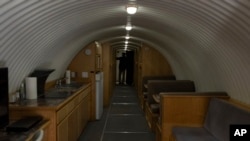
Credit: www.voanews.com
Modern Shelter Innovations
Modern bomb shelters have evolved far beyond simple underground bunkers. Innovations now focus on making shelters not only stronger but also smarter and more livable. These advancements improve your chances of survival and comfort in extreme situations.
Advanced Materials
Today’s shelters use materials that can withstand intense heat and radiation better than traditional concrete. For instance, ultra-high-performance concrete (UHPC) mixes with fibers to resist cracking under extreme pressure. Some shelters even use layered composites that absorb and disperse shock waves from blasts.
Have you considered how much stronger these materials are compared to older designs? Investing in the right materials can mean the difference between a shelter that holds and one that fails.
Smart Monitoring Systems
Modern shelters come equipped with sensors that track air quality, radiation levels, temperature, and structural integrity in real time. You can monitor these details remotely through smartphone apps or control panels inside the shelter. This technology helps you react quickly to any changes, ensuring safety before conditions worsen.
Imagine knowing the exact moment to seal off an air vent or activate filtration systems. These smart features give you control and peace of mind during uncertain times.
Sustainable Living Solutions
Being trapped underground doesn’t mean sacrificing basic comforts. Many shelters now include renewable energy sources like solar panels paired with battery storage. Water recycling systems and hydroponic gardens allow you to maintain fresh supplies without outside help.
Do you have a plan for long-term survival that includes food, water, and power? Sustainable solutions in modern shelters help you stay self-sufficient and comfortable for extended periods.
Real-world Examples
Understanding whether a bomb shelter can survive a nuclear blast is easier when you look at real-world examples. These stories reveal what has worked and what hasn’t, giving you practical insights into shelter design and effectiveness. Let’s examine actual cases from history, government installations, and private shelters that have withstood extreme conditions.
Historical Shelter Use
During World War II, underground bunkers were a common defense against bombings. The London Underground stations, for instance, served as bomb shelters during the Blitz. Thousands of people survived intense air raids by seeking refuge in these tunnels, proving that below-ground structures can offer significant protection from explosions and fallout.
However, these shelters were not designed for nuclear blasts but conventional bombs. The key takeaway is that depth and sturdy construction can protect against shockwaves and debris. Would you consider building your shelter deeper to enhance safety?
Government Bunkers
Governments have invested heavily in bunkers built to withstand nuclear attacks. The Cheyenne Mountain Complex in the United States was constructed inside a granite mountain, designed to endure a 30-megaton nuclear explosion nearby. It has survived decades without damage, demonstrating that location and material choice are critical for nuclear resilience.
Similarly, Russia’s Kosvinsky Mountain bunker was purpose-built to survive massive nuclear strikes. These facilities include air filtration systems, independent power supplies, and reinforced walls. If you are building a shelter, can you replicate even a fraction of these features to increase your chances of survival?
Private Shelter Success Stories
Many private citizens have successfully used shelters during emergencies, though few have faced nuclear attacks directly. A notable story is from the Cold War era when families invested in home bunkers equipped with air filters and stocked supplies. Those who maintained their shelters often reported peace of mind and readiness for disaster.
One family in Kansas survived a severe tornado by retreating to their reinforced basement shelter, which also doubled as a fallout shelter. This example shows that a well-built private shelter can protect against multiple threats, including nuclear fallout. Are you prepared to make your shelter versatile enough for different emergencies?
Preparing For Nuclear Emergencies
Bomb shelters can offer some protection during a nuclear blast if built strong and deep. They block radiation and debris but must be well-designed. Survival depends on shelter quality, distance from the blast, and safety supplies inside.
Preparing for nuclear emergencies requires careful planning and awareness. The threat of a nuclear event, though unlikely, demands preparation. Knowing what to do can make a huge difference in survival. Here’s how you can get ready effectively.Building Or Buying A Shelter
Choosing between building or buying a shelter depends on your resources. Building a shelter offers customization. You can design it to meet specific needs. Consider location, size, and materials. A good shelter should withstand pressure and radiation. Buying a pre-made shelter saves time. It often comes with tested features. Look for shelters with reinforced walls and filtered ventilation. These features protect against nuclear fallout.Stocking Essential Supplies
Stock your shelter with vital supplies. Food and water are top priorities. Canned goods and bottled water last long. Aim for a two-week supply. Include medical kits and personal hygiene items. Think about medications and first aid supplies. These are crucial during emergencies. Communication devices, like radios, keep you informed. Flashlights and batteries are essential too. They ensure visibility when power fails.Emergency Response Plans
An emergency response plan guides actions during a crisis. Discuss roles and responsibilities with family members. Practice drills regularly to ensure everyone knows what to do. Identify safe zones within your shelter. Designate areas for specific tasks, like eating or sleeping. This organization helps maintain order. Stay informed through reliable news sources. Understanding the situation helps in making decisions. Keep a list of emergency contacts ready. Knowing whom to call can save time and lives.Frequently Asked Questions
Can A Bomb Shelter Withstand A Nuclear Explosion?
A bomb shelter can protect against radiation and blast effects if properly built. However, it must be deep underground with thick, reinforced walls to survive a nuclear explosion’s extreme pressure and heat.
How Effective Are Bomb Shelters Against Nuclear Fallout?
Bomb shelters are highly effective against nuclear fallout. They prevent radioactive particles from entering and provide clean air filtration, reducing exposure to harmful radiation after a nuclear blast.
What Materials Make Bomb Shelters Nuclear-resistant?
Concrete, steel, and lead are common materials used. These materials absorb radiation and withstand blast forces, increasing a bomb shelter’s chance of surviving a nuclear event.
How Long Can You Stay In A Bomb Shelter After A Nuclear Blast?
You should stay in a bomb shelter for at least 48-72 hours. This period allows radiation levels outside to decrease to safer levels before exiting.
Conclusion
A bomb shelter can offer some protection against a nuclear blast. Its strength depends on location, design, and materials. No shelter can guarantee full safety from all effects. Still, a well-built shelter can save lives by blocking radiation and debris.
Planning and preparation are key. Staying informed helps you make better choices for safety. Remember, shelters are one part of a larger survival plan. Stay calm, stay ready. Safety matters most.


