Imagine being stranded on the side of the road with no help in sight. Your phone is dead, the weather is harsh, and you have nothing to keep you safe or comfortable.
Sounds scary, right? That’s why having a car survival kit is not just smart—it could save your life. In this guide, you’ll learn exactly what to pack and how to prepare your kit so you’re ready for any emergency. Keep reading, and you’ll never have to worry about being caught off guard again.

Credit: www.piloteers.org
Choosing The Right Container
Choosing the right container is key to building a practical car survival kit. The container holds all your emergency supplies. It must protect items from damage and keep them organized. A good container fits well in your car and is easy to carry.
Think about size and durability. A container too large may not fit well or be hard to move. Too small, and it won’t hold all essentials. Durability matters to keep supplies safe from water, dirt, and impact.
Material Options For Car Survival Kit Containers
Plastic containers are lightweight and water-resistant. They come with secure lids to prevent spills. Metal boxes offer strong protection but can be heavy. Fabric bags are flexible and easy to carry but less protective against water.
Size And Shape Considerations
- Choose a size that fits your car’s storage space.
- Consider shape for easy stacking or sliding under seats.
- Compact containers save space but must hold all essentials.
Features To Look For
- Waterproof or water-resistant seals.
- Handles or straps for easy carrying.
- Compartments or dividers for organizing supplies.
- Durable latches or zippers that won’t break easily.
Where To Store Your Survival Kit In The Car
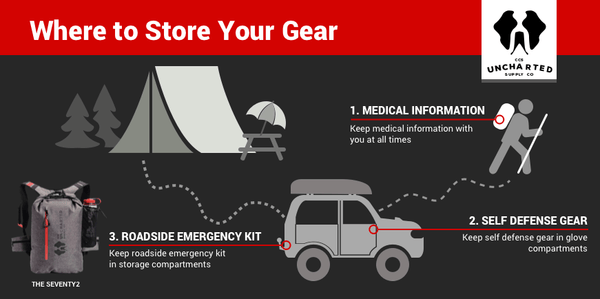
Store the container where it is easy to reach. The trunk works well if the kit is secure and organized. Under the seat or in a side compartment keeps it handy for quick access. Avoid places that block visibility or interfere with driving.
Emergency Food And Water
Emergency food and water are crucial in a car survival kit. They provide energy and hydration during unexpected situations. Carrying the right supplies ensures you stay nourished and safe. Choose items that last long and are easy to store in your vehicle.
Non-perishable Snacks
Non-perishable snacks do not spoil quickly. They are easy to carry and provide quick energy. Look for snacks with high calories and nutrients. Avoid items that need refrigeration or cooking.
- Granola bars
- Trail mix with nuts and dried fruits
- Peanut butter packets
- Crackers
- Beef jerky
- Energy bars
- Instant oatmeal packets
Choose snacks with long shelf lives. Keep them sealed to maintain freshness. Rotate supplies regularly to prevent expiration.
Water Storage Solutions
Water is vital for survival. Store enough water for at least three days. Use containers that fit your car space and are easy to carry.
- Reusable water bottles
- Collapsible water bags
- Sealed bottled water
- Water purification tablets for emergencies
Keep water containers in a cool, shaded spot inside your car. Replace water every six months to ensure safety. Consider a small water filter for longer trips.
First Aid Supplies
First aid supplies are essential in a car survival kit. They help treat injuries and prevent infections during emergencies. Keeping a well-stocked first aid kit can save lives and reduce pain.
Choose items that cover common injuries like cuts, burns, and scrapes. Pack supplies that are easy to use and durable for outdoor conditions. Check the kit regularly and replace expired items.
Basic Medical Items
- Adhesive bandages in various sizes
- Sterile gauze pads and adhesive tape
- Antiseptic wipes or solution
- Elastic bandages for sprains
- Disposable gloves
- Scissors and tweezers
- CPR face shield
- Instant cold packs
Medications And Prescriptions
- Pain relievers like ibuprofen or acetaminophen
- Antihistamines for allergic reactions
- Anti-diarrhea medication
- Hydrocortisone cream for rashes
- Any personal prescription medications
- Extra inhalers or EpiPens if needed
Tools And Equipment
Having the right tools and equipment in your car survival kit can make a huge difference during an emergency. These items help you handle unexpected situations quickly and safely. Think about the last time you got stuck somewhere—you probably wished you had a simple tool to fix or assess the problem.
Multi-tools And Knives
A multi-tool combines several useful tools into one compact device. It often includes pliers, screwdrivers, scissors, and sometimes even a small saw. This versatility means you can fix minor issues without carrying a bulky toolbox.
Choosing a good-quality knife is just as important. A sharp, sturdy knife can help with cutting ropes, opening packages, or even self-defense. Make sure your knife is easy to handle and safely stored to avoid accidents.
Have you ever needed something sharp but didn’t have it? Adding a multi-tool and knife to your kit ensures you won’t face that problem again.
Flashlights And Batteries
Light is crucial when you’re stuck in the dark or working on your car at night. A reliable flashlight can help you see clearly and signal for help if necessary. LED flashlights are powerful and energy-efficient, making them ideal for your survival kit.
Always pack extra batteries and check them regularly. Dead batteries won’t help when you need light the most. Consider rechargeable options for a more sustainable choice.
Imagine being stranded after sunset without any light source—would you feel safe or prepared? Adding flashlights and fresh batteries gives you control over such situations.
Warmth And Shelter
Keeping warm and protected is essential if you ever find yourself stranded in your car during cold weather. Your car survival kit should prioritize items that help you maintain body heat and provide shelter from harsh elements. These supplies can make a significant difference in your comfort and safety while waiting for help.
Blankets And Sleeping Bags
Start by adding high-quality blankets and sleeping bags to your kit. Wool or fleece blankets hold heat well and stay warm even when damp. My experience taught me that a compact sleeping bag designed for low temperatures can be a lifesaver during unexpected snowstorms.
Look for sleeping bags rated for temperatures below freezing if you live in colder climates. Space blankets, also called emergency blankets, are lightweight and pack small, but they reflect your body heat back to you. Keep multiple blankets in your kit so you can layer them for extra warmth.
Portable Shelters
Portable shelters protect you from wind, rain, and snow when your car isn’t enough. Small, foldable tents or bivy sacks fit easily in your kit and provide a dry, insulated space. I once used a bivy sack during a roadside emergency, and it blocked the wind enough to keep me from shivering all night.
Consider a compact tarp or emergency shelter that you can set up quickly outside your vehicle. These can shield you from rain or create a windbreak. Ask yourself: How will you stay dry if your car windows get stuck open or if you need to wait outside for hours?

Credit: lovelyindeed.com
Communication Devices
Communication devices are vital for safety during car emergencies. They help you call for help, get updates, and stay connected. A well-prepared car survival kit must include reliable tools to maintain communication.
Cell Phone Chargers
Cell phones need power to work in emergencies. Carrying extra chargers keeps your phone ready to use. Choose portable chargers or power banks with high capacity. A car charger that plugs into the cigarette lighter is useful. Keep cables organized and easy to reach. This ensures your phone stays charged on long trips or during power outages.
Emergency Radios
Emergency radios provide vital news and weather updates. Many models include NOAA weather channels for real-time alerts. Radios with hand cranks or solar panels work without batteries. Some radios also have built-in flashlights or sirens. Having an emergency radio in your survival kit helps you stay informed. It is a reliable tool when cell signals fail or power is out.
Vehicle Maintenance Essentials
Vehicle maintenance essentials are crucial for a car survival kit. They help keep your car running and prevent small problems from turning into emergencies. Carrying the right tools and supplies can save time and stress during unexpected breakdowns. Focus on items that fix common issues quickly and safely.
Jumper Cables
Dead batteries happen to everyone. Jumper cables let you restart your car with help from another vehicle. Choose cables that are thick and long enough to reach between cars easily. Store them in a durable bag to avoid damage and tangling. Always check the cables for corrosion or breaks before trips.
Tire Repair Kits
A flat tire can stop your journey fast. Tire repair kits provide tools and materials to fix small punctures without changing the tire. Most kits include sealant and an air compressor or hand pump. Learn how to use the kit properly to avoid mistakes. Keep the kit in an easy-to-reach place in your car.
Personal Safety Items
Personal safety items are essential parts of your car survival kit. They provide protection and visibility in unexpected situations. Think about times when you’ve had to step out of your car on a busy road—having the right safety gear can make a real difference.
Reflective Vests
Reflective vests increase your visibility to other drivers, especially at night or in poor weather. Keeping a vest in your kit ensures you can stay safe while walking around your vehicle. Imagine being on the roadside during a heavy rainstorm; the vest catches headlights and alerts others to your presence.
Choose vests that are lightweight and easy to fold. Some come with multiple pockets, which can be handy for holding small tools or your phone. Do you have one in your car right now?
Pepper Spray
Pepper spray is a compact self-defense tool that can help you feel more secure if you ever face a threatening situation. It’s easy to carry and use, even if you have no prior experience. Just remember to check local laws regarding its use and keep it accessible but safely stored.
Adding pepper spray to your survival kit means you’re prepared for more than just mechanical troubles. It’s about protecting yourself from people as well as the elements. Have you considered how you’d react if you felt unsafe at a roadside stop?
Seasonal Considerations
Seasonal changes dramatically affect what you need in your car survival kit. A kit that works well in summer might leave you stranded in winter. Adjusting your supplies according to the season ensures you’re prepared for the specific challenges each one brings.
Winter Gear
Cold weather demands more than just a warm jacket. You should add items that protect you from freezing temperatures and icy conditions.
- Blankets and thermal sleeping bags:These keep you warm if you get stuck overnight.
- Ice scraper and snow brush:Clear your windshield quickly to maintain visibility.
- Hand warmers:Small but effective for keeping your fingers warm during emergencies.
- Traction aids like sand or kitty litter:Help your tires gain grip on slippery roads.
- Extra gloves, hats, and waterproof boots:Wet feet and hands can cause serious discomfort and hypothermia.
Think about the last time you faced a winter emergency. Did you have the right gear to keep comfortable and safe? If not, this is your chance to fix that.
Summer Supplies
Heat and sun bring their own risks. Your survival kit should help you stay cool and hydrated while protecting you from sun exposure.
- Plenty of water:Dehydration happens fast in hot weather, so stock extra bottles.
- Sunscreen and a wide-brimmed hat:Protect your skin from harmful UV rays.
- Cooling towels or mist spray bottles:These can lower your body temperature quickly.
- Non-perishable snacks with electrolytes:Keep your energy up and replace lost minerals.
- Reflective windshield shade:Helps keep your car interior cooler if you get stuck.
Have you ever been caught in a heatwave without enough water or shade? That discomfort can turn dangerous fast. Preparing your kit for summer helps you avoid that risk.

Credit: tech.yahoo.com
Organizing And Packing
Organizing and packing a car survival kit is crucial for quick access and efficient use. A well-packed kit saves time and stress in emergencies. It helps keep essentials neat and easy to find. Thoughtful organization also protects items from damage during travel.
Efficient Storage Tips
Use sturdy, waterproof containers to protect your supplies. Choose clear bins or bags to see contents at a glance. Group similar items together, such as first aid or tools. Use small zippered pouches for loose items like batteries or matches. Pack heavier items at the bottom to keep the kit stable. Label containers for faster identification during a crisis.
Accessibility And Placement
Store the survival kit in an easy-to-reach spot in your car. The trunk is common but can be hard to access quickly. Consider the backseat or under a seat for faster reach. Keep essential items like water and a flashlight near the driver’s seat. Make sure the kit does not block exits or emergency tools. Check kit placement regularly to ensure it stays organized and accessible.
Frequently Asked Questions
What Are Essential Items For A Car Survival Kit?
A car survival kit should include water, non-perishable food, first aid supplies, flashlight, blankets, and basic tools. These items help you stay safe and comfortable during emergencies on the road.
How Often Should I Update My Car Survival Kit?
Update your car survival kit every six months. Check for expired food, batteries, and medication. Replace any used or damaged items to ensure readiness.
Can A Car Survival Kit Help In All Emergencies?
Yes, a well-prepared car survival kit can assist in various emergencies like breakdowns, weather events, or getting stranded. It provides essential supplies to keep you safe until help arrives.
Where Should I Store My Car Survival Kit?
Store your car survival kit in an easily accessible spot like the trunk or under the seat. Make sure it’s secure but reachable during emergencies.
Conclusion
A car survival kit helps you stay safe on the road. Prepare it with basic items like water, food, and tools. Check your kit often to keep supplies fresh. Carrying a kit gives peace of mind during emergencies. Small efforts today can protect you tomorrow.
Stay ready, stay safe, and drive with confidence.