Have you ever wondered if bacteria can survive in extreme heat, like 300 degrees? It sounds impossible, right?
After all, that’s hotter than your oven on a baking day. But what if some bacteria could not only survive but thrive in such harsh conditions? Understanding this can change the way you think about germs, heat, and safety. Keep reading to discover the surprising truth about bacteria and extreme temperatures—you might be amazed at what you learn.
Credit: www.nature.com
Bacteria And Heat Resistance
Bacteria are often seen as fragile organisms that can’t handle extreme conditions, but that’s not always true. Some bacteria have developed impressive ways to survive intense heat, even temperatures that would kill most life forms. Understanding how bacteria resist heat can help you grasp the limits of their survival and why sterilization methods like boiling or autoclaving work the way they do.
Temperature Limits For Bacterial Survival
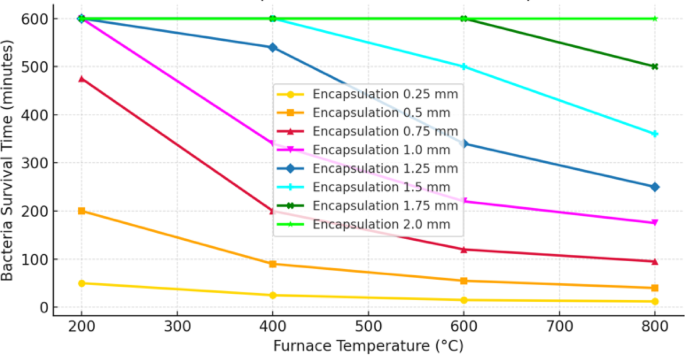
Most bacteria thrive between 20°C and 45°C, but their survival limits extend beyond this range. When temperatures climb above 60°C, many bacteria begin to die off quickly. However, some can survive short exposures to temperatures nearing 100°C, especially if they form protective spores.
Now, what about 300 degrees? Such extreme heat is far beyond what any known bacteria can tolerate while actively growing. At this point, the proteins and cell structures would break down rapidly. Even heat-resistant spores would be destroyed at this level.
Types Of Heat-resistant Bacteria
There are bacteria designed to handle high heat, mainly categorized as thermophiles and hyperthermophiles:
- Thermophiles:These bacteria prefer temperatures from 45°C to 80°C. They live in environments like hot springs and compost piles.
- Hyperthermophiles:These thrive above 80°C, some even near 122°C, found in deep-sea hydrothermal vents.
Even these extreme bacteria have limits far below 300°C. Their cellular machinery is adapted to heat but not to the point where molecules start vaporizing or burning. It’s fascinating to think about how life pushes boundaries, but 300 degrees is a heat level that no bacteria can survive.
Credit: www.nature.com
Effects Of Extreme Heat On Cells
Extreme heat poses a serious threat to the survival of bacterial cells. At temperatures approaching 300 degrees, the fundamental structures within cells face intense stress. Understanding how heat affects these tiny life forms can reveal why most bacteria cannot endure such conditions.
Protein Denaturation And Cell Damage
Proteins are essential for bacteria to function properly. High heat causes proteins to lose their shape, a process called denaturation. When proteins unfold, they can no longer perform vital tasks, which leads to cell damage.
This damage isn’t just minor—it can be irreversible. Once the proteins are denatured, the cell’s machinery breaks down. Without functional proteins, the bacteria cannot survive or reproduce.
Heat Shock Proteins Role
Interestingly, bacteria have a defense system against sudden heat increases: heat shock proteins (HSPs). These proteins help refold damaged proteins and protect the cell during heat stress.
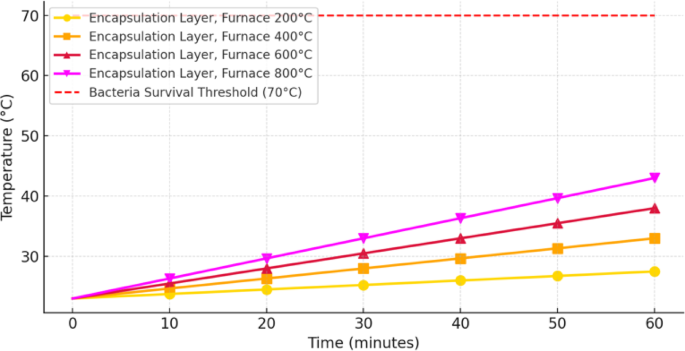
However, HSPs have their limits. At extremely high temperatures, like 300 degrees, even these protective proteins fail to keep the cell intact. This highlights the fine line bacteria walk between survival and destruction under heat stress.
Have you ever wondered how some bacteria survive in hot springs but not in a scorching oven? The presence and efficiency of heat shock proteins largely explain this difference.
Survival Mechanisms In Extreme Heat
Bacteria can survive extreme heat through special survival mechanisms. These adaptations protect their cells and allow life to continue in harsh conditions. Understanding these methods reveals how some bacteria endure temperatures near 300 degrees Fahrenheit or higher.
Endospore Formation
Some bacteria form endospores to survive extreme heat. An endospore is a tough, dormant structure. It protects the bacterial DNA and vital parts from heat damage. Inside the endospore, water content is very low, reducing heat impact.
Endospores can resist heat, drying, chemicals, and radiation. When conditions improve, the endospore can become an active bacterial cell again. This process helps bacteria survive long periods of heat stress.
Thermophiles And Hyperthermophiles
Thermophiles thrive in high temperatures, usually between 113°F to 176°F. Hyperthermophiles survive at even hotter conditions, often above 176°F, and some near 300°F. Their proteins and cell membranes have special structures.
These adaptations keep their molecules stable and functional at high heat. Their enzymes work efficiently at temperatures that would destroy most life. Heat-stable membranes prevent cell damage and leakage.
These bacteria often live in hot springs, deep-sea vents, and geothermal soils. Their natural habitats expose them to extreme heat regularly, driving their unique survival traits.
Credit: www.nature.com
Can Bacteria Endure 300 Degrees?
Bacteria are known for their incredible ability to survive in extreme environments. But can they truly endure temperatures as high as 300 degrees Fahrenheit (about 149 degrees Celsius)? Understanding this helps in areas like food safety, sterilization, and even space exploration. Let’s dig into what science says about bacterial survival at such intense heat.
Scientific Experiments On High-temperature Survival
Scientists have tested bacteria under various heat conditions to see their limits. Most bacteria start dying at temperatures above 140°F (60°C). However, some heat-loving bacteria, called thermophiles, thrive at temperatures up to around 250°F (121°C).
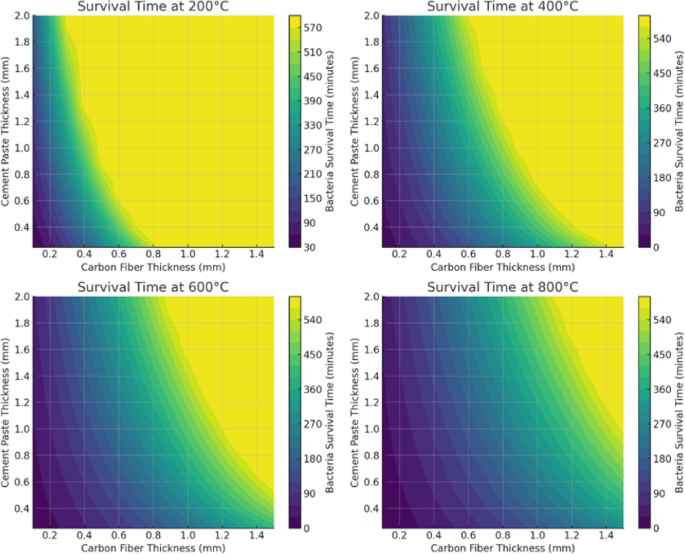
Experiments using autoclaves, which sterilize equipment at about 250°F under pressure, show that most bacteria cannot survive beyond this point. But 300°F is even hotter, usually reached during dry heat sterilization processes. Studies reveal that very few, if any, bacteria can survive sustained exposure to 300°F.
Limitations Of Bacterial Heat Tolerance
Bacterial cells have proteins and membranes sensitive to heat. At extremely high temperatures like 300°F, these structures break down. This leads to cell death within minutes or even seconds.
- Most bacteria’s enzymes denature at temperatures well below 300°F.
- Heat damages DNA and RNA, preventing replication and repair.
- Only specialized spores from certain bacteria can withstand extreme heat, but even they struggle at 300°F.
Have you ever wondered why your oven’s heat kills bacteria on food surfaces? This is because the heat breaks down the bacteria’s vital components. So, while some bacteria survive in boiling water or hot springs, 300°F is generally beyond their survival range.
Practical Implications
Bacteria’s ability to survive extreme heat has practical effects in many fields. Understanding how heat affects bacteria guides safe practices and technology. This knowledge impacts how we handle food and maintain hygiene in industries. It also shapes how we control environments to reduce bacterial risks.
Sterilization And Food Safety
Heat is a key tool for killing bacteria. Temperatures close to 300 degrees Celsius destroy most bacteria quickly. This helps in sterilizing medical tools and cooking food thoroughly. Proper heat use prevents foodborne illnesses by killing harmful microbes. Food safety depends on reaching and maintaining high temperatures during cooking.
Using high heat for sterilization ensures no bacteria survive on instruments. This lowers infection risks in hospitals and clinics. In food processing, heat treatment reduces spoilage and extends shelf life. Heat sterilization is reliable and widely used for these reasons.
Industrial And Environmental Considerations
Industries use heat to control bacteria in various settings. Waste treatment plants rely on high heat to kill germs in sludge. Heat also helps clean equipment and prevent contamination in factories. Some bacteria can form spores that resist heat, requiring even higher temperatures or longer exposure.
Environmental control involves managing bacteria in hot environments like composting sites. Understanding bacterial limits helps design safer and cleaner industrial processes. Heat treatments reduce harmful bacteria, protecting workers and the environment. This knowledge supports better hygiene and safety standards.
Frequently Asked Questions
Can Bacteria Withstand 300 Degrees Celsius?
Most bacteria cannot survive at 300 degrees Celsius. Such extreme temperatures typically destroy bacterial cells. However, some extremophiles, like certain archaea, can endure high temperatures. These organisms have adapted to extreme environments, but they are exceptions. Most bacteria thrive in much milder conditions, making 300 degrees far too extreme for their survival.
Do Extremophiles Thrive In High Temperatures?
Yes, extremophiles can thrive in high temperatures. They are specialized microorganisms adapted to survive extreme conditions. Some extremophiles, known as thermophiles, can withstand temperatures well above boiling. However, 300 degrees Celsius is extreme even for many extremophiles, and only a few specialized species can endure such heat.
What Is The Highest Temperature Bacteria Can Survive?
Some bacteria can survive temperatures up to around 122 degrees Celsius. Hyperthermophiles, a type of extremophile, thrive in such conditions. However, 300 degrees Celsius is beyond their survival capacity. These bacteria have unique proteins and cellular structures that prevent denaturation, but such extreme heat typically exceeds their limits.
How Do Bacteria Adapt To Extreme Heat?
Bacteria adapt to extreme heat through specialized proteins and cellular structures. These adaptations prevent protein denaturation and maintain cell integrity. Thermophiles, in particular, have unique enzymes that function efficiently at high temperatures. Despite these adaptations, 300 degrees Celsius is usually too extreme for most bacteria.
Conclusion
Bacteria rarely survive at 300 degrees. Most cannot live in such extreme heat. Only special types, like some spores, might survive briefly. This shows how tough heat can kill germs fast. Understanding this helps in cleaning and safety. Heat is a strong tool against bacteria.
Keep this in mind when dealing with germs. Safe temperatures protect us from many illnesses. Science keeps exploring how bacteria live and die. The facts are clear: 300 degrees is mostly deadly for bacteria.